
National Honor and Personal Safety
The Day of the JackalThis flow examines how the novel connects political dignity to the willingness of leaders and institutions to accept personal danger.
increasing Bearing strength in each event
 decreasing
Bearing strength in each eventdecreasingThe President as Symbol
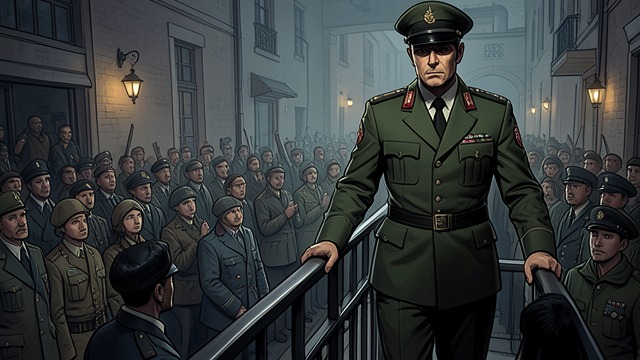
The President as Symbol
A threat to more than one man
Roger Frey sees that an assassination could destabilize France because Charles de Gaulle embodies the authority of the Fifth Republic. The stakes extend beyond personal survival to the future of the state.
The burden of representation
De Gaulle’s public behavior is inseparable from the political meaning attached to his office. His choices carry national consequences even when they arise from pride or personal conviction.
Refusal to Appear Afraid
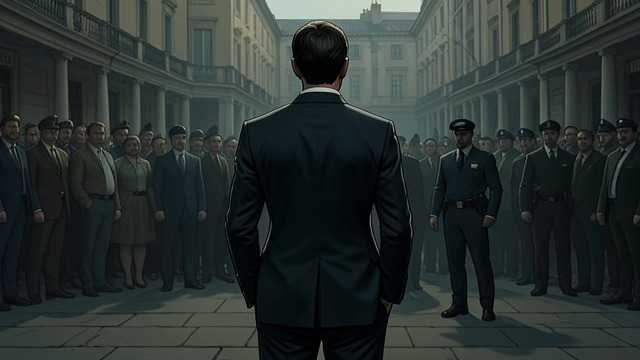
Refusal to Appear Afraid
Public schedule preserved
Charles de Gaulle rejects calls to cancel appearances or shelter from the threat. His refusal protects a public image of strength and continuity.
Security carries the contradiction
The state must secretly intensify its precautions while publicly maintaining normality. The policy protects dignity as a spectacle, but exposes security personnel to the consequences of an attack that the public has not been told to anticipate.
The Officials’ Unequal Risks
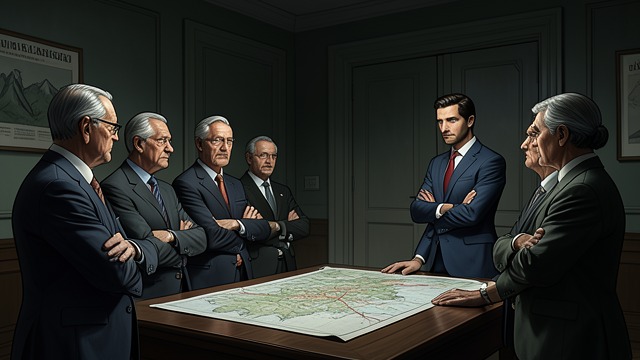
The Officials’ Unequal Risks
Responsibility moves downward
Senior officials debate which department should lead and criticize Lebel when the assassin escapes. The detective and front-line officers bear immediate physical and professional danger, while political leaders retain the power to judge their performance.
Expertise without prestige
Lebel’s quiet competence repeatedly exceeds the assumptions of officials who value status and presentation. The novel contrasts practical responsibility with the desire to protect institutional reputation.
Ceremony Under Arms
Ceremony Under Arms
A guarded city
Police and security forces secure the Arc de Triomphe, Notre-Dame de Paris, and Mont-Valérien, yet the President continues his commemorative route. The city’s rituals proceed inside a dense structure of surveillance.
Normality as performance
The event appears orderly to the public while its organizers prepare for violence at every turn. The contrast shows how national confidence can depend on an immense, concealed labor of protection.
Survival Without Certainty
Survival Without Certainty
A narrow escape
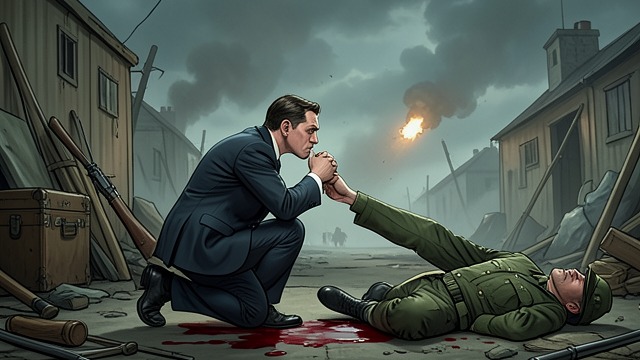
Charles de Gaulle survives because he bends to kiss a veteran at the instant The Jackal fires. The outcome is not a triumph of perfect security but a convergence of vigilance and accident.
Dignity’s fragile balance
The President’s public appearance preserves the image he wished to defend, but only after a near-fatal attempt and the death of a guard. The ending leaves political dignity inseparable from real human risk.
August 11, 1963
August 11 to 24, 1963
August 12 to 25, 1963
August 25, 1963, morning
August 25, 1963, afternoon
